Gambling addiction is more common in Australia than most people think. According to the Australian Institute of Health and Welfare, Australians lose around $25 billion a year on legal gambling. That is one of the highest losses per person anywhere in the world. Behind that number are everyday people across Sydney, NSW, and the rest of the country who started with a harmless punt and slowly lost control.
Maybe it began with a few bets on the footy, a quick go on the pokies after work, or an app that lets you bet from the couch. Over time, you might be spending more than you planned, hiding it from the people you love, or feeling sick every time you check your bank balance. If that sounds familiar, you are not alone. Problem gambling is nothing to be ashamed of, and gambling help really does work. The sooner you reach out, the easier it is to turn things around. If gambling is taking a toll on your money, your relationships or your peace of mind, contact me at Where’s Your Head At on 0499 993 077, visit 20/1 Maitland Place, Norwest NSW 2153, or book an appointment online. If you’d like, call or book a short phone chat first so I can answer any questions and help you feel prepared.
This how-to guide walks you through what gambling addiction looks like, the warning signs to watch for, when to reach out, and the simple steps you can take to feel in control again.
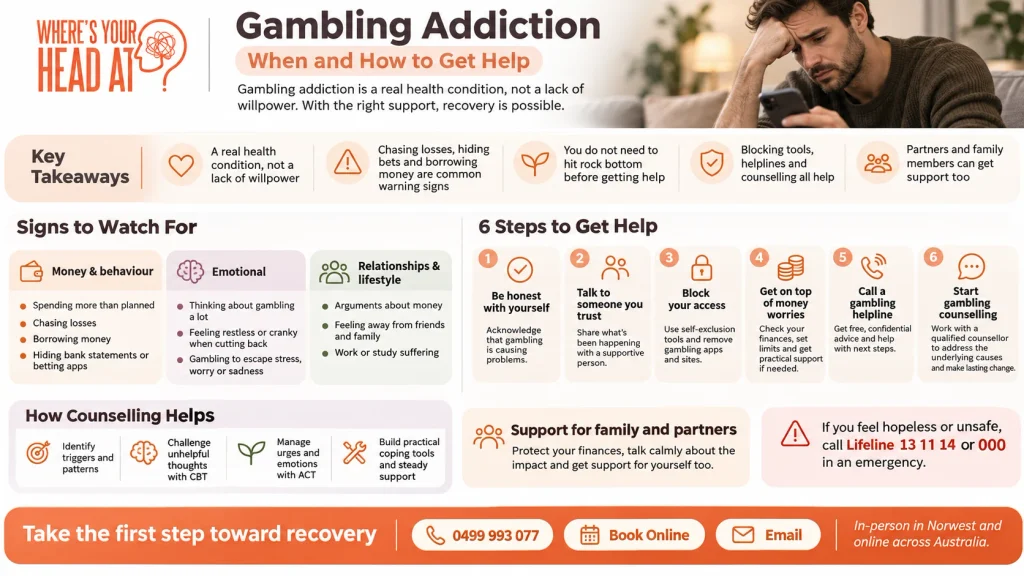
Key Takeaways
- Gambling addiction is a real health condition, not a lack of willpower.
- Chasing losses, hiding bets and borrowing money are common warning signs.
- You do not need to hit rock bottom before you get help.
- Free helplines, blocking tools and counselling all play a part in recovery.
- Partners and family members can get support too.
What Is Gambling Addiction?
Gambling addiction, also called compulsive gambling or gambling disorder, is when you keep gambling even though it is hurting your life. The harm is often about money, but it can also affect your relationships, your work, your sleep and how you feel about yourself.
Gambling problems sit on a scale. You might just be noticing that your betting is creeping up, or you might feel like gambling has taken over. Wherever you are on that scale, your concerns are valid and support is available.
Why Is Gambling So Hard to Stop?
Gambling taps into your brain’s reward system. Wins are random, and that randomness is exactly what keeps you coming back. A near miss can feel almost as exciting as a win. A loss can create a strong urge to win the money back.
Many people also gamble to escape stress, boredom, loneliness or low mood. When gambling becomes your main way to cope, cutting back feels even harder. Knowing this can help you swap shame for curiosity, which is a much better place to start.
Signs of Gambling Addiction to Watch For
There is no single test, but some patterns are worth noticing. Here are common signs of gambling addiction you might see in yourself or someone close to you.
Money and Behaviour Signs
- You spend more time or money on gambling than you planned.
- You chase losses by betting more to win money back.
- You borrow money, sell things or use bill money to gamble.
- You hide bank statements, betting apps or how much you spend.
Emotional Signs
- You think about gambling a lot, even when doing other things.
- You feel restless or cranky when you try to cut back.
- You gamble to escape stress, worry or sadness.
Relationship and Lifestyle Signs
- You argue with your partner or family about money.
- You pull away from friends, hobbies, or family time.
- Your work or study starts to suffer.
Pokies, Sports Betting, and Online Gambling
Gambling problems can show up in different ways. Pokies addiction is a big issue in NSW, where poker machines are easy to find in pubs and clubs. Sports betting addiction has grown quickly as betting ads have become part of watching the footy, cricket and racing. Online gambling addiction can be especially tricky because your phone gives you access to betting 24 hours a day, with no one around to notice.
The table below shows how gambling for fun can differ from a growing problem.
| Gambling for fun | A growing problem |
| You set a budget and stick to it | You often spend more than you planned. |
| You accept losses as part of the fun | You chase losses to win money back. |
| You gamble now and then, openly | You gamble often and hide how much |
| You can stop without much trouble | You feel restless or cranky when you stop. |
| Gambling is one hobby among many | Gambling pushes out people, sleep, and interests |
When Should You Get Help for Gambling Addiction?
The simple answer is this. If gambling is worrying you, that is reason enough to reach out. Many people wait until debts pile up or a relationship is at breaking point, but getting gambling addiction help early gives you more options and less stress.
Signs It Is Time to Reach Out
It’s time to get help if you have tried to cut back and couldn’t, if you are keeping gambling a secret, if you’re betting money you need for bills, or if someone close to you is worried. It is also worth reaching out if gambling has become your main way to deal with hard feelings.
If You Need Urgent Support
Money worries and shame can feel very heavy. If you feel hopeless or have thoughts of suicide, please call Lifeline on 13 11 14 at any time, or call 000 in an emergency.
How to Get Help for Gambling Addiction in 6 Steps
Recovery is rarely one big decision. It is usually a mix of honest conversations, practical barriers and steady support. Follow these steps to get started.
Step 1: Be Honest With Yourself
Take a calm look at how much time and money gambling is taking from you. Check your bank statements for the past few months and write down what you find. Seeing the real numbers can be confronting, but it gives you a clear starting point.
Step 2: Talk to Someone You Trust
Secrecy keeps gambling problems going. Telling a partner, friend or family member can feel scary, but most people feel relief once it is out in the open. It also makes it easier to stay on track.
Step 3: Block Your Access
If you are wondering how to stop gambling, start by making it harder to gamble. Sign up to BetStop, the national self-exclusion register that blocks you from licensed online and phone betting in Australia. Ask your bank about blocking gambling payments on your cards. Delete betting apps, and ask about self-exclusion at your local pubs and clubs. These barriers give you breathing space when urges hit.
Step 4: Get on Top of Money Worries
Debt can make you feel trapped, which can lead to more gambling. Free financial counselling offers practical gambling debt help, including dealing with lenders and making a budget you can stick to. You can call the National Debt Helpline on 1800 007 007.
Step 5: Call a Gambling Helpline
A gambling helpline is a free and confidential place to start. The National Gambling Helpline is available 24/7 on 1800 858 858, and Gambling Help Online offers live chat and email support. In NSW, GambleAware also offers free counselling and financial help. Peer groups like Gamblers Anonymous can connect you with people who truly understand.
Step 6: Start Gambling Counselling
Gambling counselling helps you understand what is driving your gambling and build a plan that fits your life. Professional counselling gives you a safe, private space to talk without being judged. It is one of the most effective steps you can take.
How Counselling Helps With Gambling Addiction
Good gambling addiction treatment is not about lectures. It is about understanding your patterns and finding better ways to cope.
Therapy Approaches Used in Gambling Counselling
At Where’s Your Head At, sessions draw on proven approaches, including:
- Cognitive Behavioural Therapy (CBT), which helps you challenge thoughts like “I am due for a win” or “one more bet will fix this”.
- Acceptance and Commitment Therapy (ACT), which helps you sit with urges without acting on them and focus on what matters to you.
- Solution-Focused Therapy, which builds on your strengths and the small changes that are already working.
- Psychodynamic Therapy, which explores how past experiences may be shaping your habits today.
Support for What Sits Underneath
Gambling often goes hand in hand with other struggles. Your sessions can also look at what sits underneath, with support such as anxiety counselling, depression counselling or stress and burnout counselling. Slip-ups can happen, and that is okay. In counselling, a setback is something to learn from, not a reason to give up.
Gambling Counselling in Sydney and Online
If you are looking for gambling counselling in Sydney, Where’s Your Head At offers in-person sessions at 20/1 Maitland Place, Norwest, and online across Australia. Online sessions can be a great option if you live outside Sydney or find it easier to talk from home.
How to Support Someone With a Gambling Problem
Watching someone you care about struggle with gambling can be exhausting. You might feel angry, worried, let down, or unsure if you are overreacting. These tips can help.
Practical Tips for Family and Friends
- Pick a calm time to talk, not the middle of an argument.
- Talk about specific impacts, like missed bills, instead of using labels.
- Protect your own money, such as by keeping separate accounts.
- Try not to keep paying off their debts, as this can keep the cycle going.
- Look after yourself and get support, even if they are not ready to change.
Support for Couples, Families and Young People
Gambling Help Online also supports family and friends. If gambling is straining your relationship or household, couples therapy or family therapy can help you rebuild trust. If you are worried about a teenager who bets on their phone, counselling for young people can help them talk things through safely.
Take the First Step Toward Recovery
Gambling addiction can feel lonely, but it is common, understandable and treatable. You now know the signs of gambling addiction to watch for, from chasing losses to hiding bets, and how to tell when it is time to reach out. You also have six clear steps to follow: be honest with yourself, talk to someone you trust, block your access with tools like BetStop, get gambling debt help, call a gambling helpline and start gambling counselling. Whether you are struggling with pokies addiction, sports betting addiction or online gambling addiction, or supporting someone you love, you do not have to face it alone. Approaches like CBT and ACT can help you understand your patterns and build a life that no longer revolves around gambling.
If you are ready to take back control from gambling, or want support for a partner or family member, contact me at Where’s Your Head At on 0499 993 077, visit 20/1 Maitland Place, Norwest NSW 2153, or book an appointment online. If you’d like, call or book a short phone chat first so I can answer any questions and help you feel prepared.
Gambling Addiction FAQs
What is the difference between problem gambling and gambling addiction?
Problem gambling means gambling is causing harm to your money, relationships or wellbeing. Gambling addiction, or gambling disorder, is the more serious end of that scale, where you feel unable to stop even when you want to. Both are worth taking seriously, and both respond well to support.
What are the first signs of gambling addiction?
The first signs of gambling addiction often include spending more than you planned, chasing losses, hiding how much you bet and feeling restless when you try to cut back. Many people also notice they gamble to escape stress or low mood. Spotting these signs early makes change easier.
How do I stop gambling online in Australia?
To stop gambling online, register with BetStop, block gambling payments through your bank, delete betting apps and use blocking software. These steps make online gambling addiction easier to manage. Pairing them with counselling or a helpline gives you the best chance of lasting change.
Where can I get free gambling help in Australia?
You can get free gambling help from the National Gambling Helpline on 1800 858 858, which is open 24/7, or through Gambling Help Online. In NSW, GambleAware offers free counselling. For gambling debt help, call the National Debt Helpline on 1800 007 007.
How does counselling help with gambling addiction?
Gambling counselling helps you understand your triggers, challenge unhelpful thoughts and build healthier ways to cope. Approaches like CBT and ACT are common parts of gambling addiction treatment. Counselling can also address stress, anxiety or low mood that may be fuelling the urge to gamble.
Can you fully recover from gambling addiction?
Yes. Many people stop or greatly reduce their gambling with the right support. Recovery is often gradual, and slip-ups are a normal part of change rather than a sign of failure. Ongoing support helps you stay on track and handle high-risk moments.
Where can I find gambling counselling in Sydney?
Where’s Your Head At offers confidential gambling counselling in person at 20/1 Maitland Place, Norwest NSW 2153, and online across Australia. You do not need a referral. You can book online or call 0499 993 077 to start with a short phone chat.
How can I help a partner with a gambling problem?
Choose a calm time to talk, focus on specific impacts rather than labels, and protect your own finances. Avoid repeatedly paying off their debts. Get support for yourself too, whether through Gambling Help Online or counselling, even if your partner is not ready to change.