Christian counselling can help you face one of the hardest parts of faith: forgiving someone who has hurt you. Maybe it’s a partner who broke your trust, a parent who let you down, a friend who walked away or a church community that left you feeling rejected. You might know the Bible calls you to forgive, yet your heart still feels heavy, angry or stuck. You may even feel guilty for not being able to let go. You’re not alone in this. The Australian Bureau of Statistics National Study of Mental Health and Wellbeing (2020 to 2022) found that 42.9% of Australians aged 16 to 85 have experienced a mental disorder at some point in their life, and around one in five had one in the past 12 months. The 2021 Census also showed that 43.9% of Australians identify as Christian. That means many people across Australia carry emotional pain while trying to live out their faith, and unforgiveness often sits right in the middle of that struggle.
Holding onto hurt can affect your sleep, your mood, your relationships and even your connection with God. Faith-based counselling gives you a safe place to bring both your feelings and your beliefs without having to choose between them. In this guide, you’ll learn what forgiveness really means, what it doesn’t mean, and practical steps to start healing through grace.
If unforgiveness or past hurt is weighing on your heart and your faith, contact me at Where’s Your Head At on 0499 993 077, visit 20/1 Maitland Place, Norwest NSW 2153, or book an appointment online. If you’d like, call or book a short phone chat first so I can answer any questions and help you feel prepared.
Key Takeaways
- Forgiveness is a process, not a one-time feeling.
- Forgiving someone doesn’t mean excusing harm, forgetting or giving up healthy boundaries.
- Unforgiveness can feed into stress, worry and low mood.
- Christian counselling brings faith and evidence-based tools together to support your healing.
- You can get support in person at Norwest or online across Australia.
What Forgiveness Means in Christian Counselling
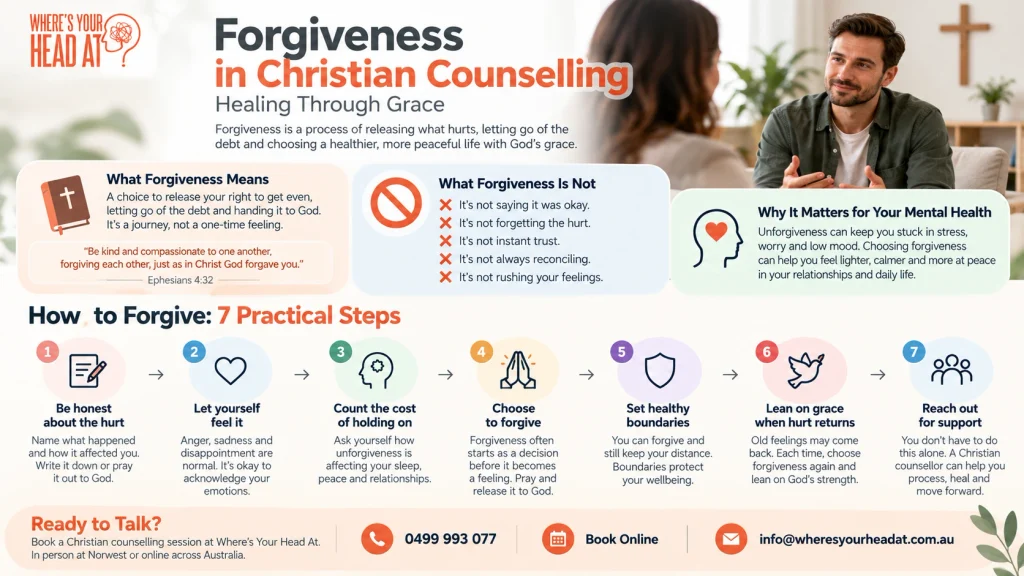
Forgiveness is a choice to release your right to get even. It means letting go of the debt someone owes you and handing it to God. Ephesians 4:32 puts it simply: forgive each other, just as in Christ God forgave you.
In Christian counselling, forgiveness is treated as a journey. You might choose to forgive today and still feel hurt tomorrow. That doesn’t mean you’ve failed. It means healing takes time.
The Role of Faith and Scripture
Biblical counselling and spiritual counselling draw on scripture, prayer and reflection. These can remind you of God’s grace and give you strength when forgiveness feels out of reach.
The Role of Practical Therapy Tools
A good Christian counsellor also brings in practical, evidence-based tools. These help you understand your thoughts, manage strong emotions and build healthier patterns.
What Forgiveness Is Not
Many people resist forgiveness because they misunderstand it. Forgiveness is not:
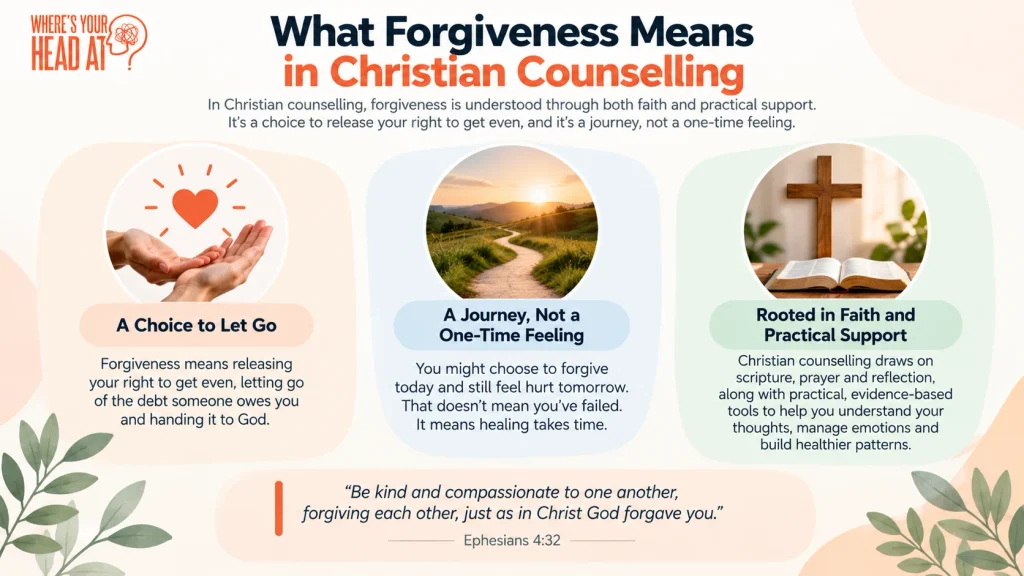
- Saying it was okay. Wrong is still wrong.
- Forgetting. You can remember the hurt and still choose not to hold it against someone.
- Instant trust. Trust is rebuilt over time through changed behaviour.
- Always reconciling. You can forgive and still keep your distance.
- Rushing your feelings. Grace makes room for grief, anger and honesty.
A Note on Safety
If you’re dealing with abuse or ongoing harm, your safety comes first. Forgiveness never means staying somewhere you’re not safe.
How to Forgive: A Step-by-Step Guide
Use these steps as a gentle guide. Take your time and come back to any step whenever you need to.
Step 1: Be Honest About the Hurt
Name what happened and how it affected you. Write it down or pray it out loud. God already knows your heart, so you don’t need to pretend you’re fine.
Step 2: Let Yourself Feel It
Anger, sadness and disappointment are normal. Pushing them down often makes them stronger. Christian mental health counselling helps you feel these emotions safely.
Step 3: Count the Cost of Holding On
Ask yourself what unforgiveness is costing you. Is it affecting your sleep, peace or relationships? Seeing the cost can help you decide to let go.
Step 4: Choose to Forgive
Forgiveness often starts as a decision before it becomes a feeling. You might pray, “God, I release this person to you. Help me mean it more each day.”
Step 5: Set Healthy Boundaries
Forgiving someone doesn’t mean giving them full access to your life. Christian relationship counselling can help you plan and communicate clear boundaries.
Step 6: Lean on Grace When Hurt Returns
Old feelings may return when something reminds you of what happened. Each time, you can choose forgiveness again and lean on God’s strength instead of your own.
Step 7: Reach Out for Support
You don’t have to do this alone. Talking with a Christian counsellor gives you space to process pain, explore your faith and move forward.
How Forgiveness Affects Your Mental Health
Holding onto hurt can keep your mind and body on high alert. Over time, resentment can feed into stress and low mood.
Anxiety and Low Mood
Christian anxiety counselling and Christian depression counselling often include work on letting go, because ongoing resentment can add to worry and heaviness.
Grief and Loss
Loss can stir up anger or regret towards others, yourself or even God. Christian grief counselling gives you room to grieve and work through those feelings.
Trauma
When hurt runs deep, forgiveness needs extra care. Christian trauma counselling moves at your pace, so you’re never pressured to forgive before you’re ready.
Forgiveness in Marriage, Family, and Youth
Close relationships are often where we’re hurt the most.
Marriage and Couples
Christian marriage counselling and Christian couples counselling help partners talk openly about hurt, take responsibility and rebuild trust.
Families
Christian family counselling supports families to repair relationships, break unhealthy patterns and handle conflict better.
Young People
Christian youth counselling gives young people a safe space to explore forgiveness in a way that fits their age and faith.
Healing From Church Hurt and Religious Trauma
Being hurt by a church leader or community can shake your faith at its roots. Church hurt and religious trauma counselling offers a respectful place to separate what happened from who God is to you. With faith and spirituality support, your questions, doubts and pain are all welcome, without judgement.
How to Forgive Yourself
Sometimes the hardest person to forgive is you. Guilt and shame can keep you stuck in the past. Grace reminds you that you’re more than your worst moments. Faith-based counselling can help you swap harsh self-talk for self-compassion while still taking healthy responsibility.
How a Christian Counsellor Can Help
At Where’s Your Head At, I offer Christian counselling that respects your faith and supports your mental health. Together, we can:
- Explore the hurt you’re carrying
- Use scripture and prayer if that’s helpful to you
- Build tools to manage anger, worry and low mood
- Set boundaries that protect your wellbeing
- Move towards forgiveness at your own pace
You can see me in person at my Norwest practice or online. To learn more about the wider support I offer, visit my counselling and psychotherapy page.
Conclusion
Forgiveness isn’t easy, and it rarely happens overnight. You might take one step forward and then feel the hurt all over again. That’s okay. Healing through grace is a journey, and every honest step you take matters. Remember that forgiving someone doesn’t mean excusing what happened, forgetting the pain or giving up healthy boundaries. It means choosing to release the weight you’ve been carrying so it no longer controls your peace, your relationships or your faith.
You don’t have to work through this on your own. Christian counselling gives you a safe, non-judgemental space to bring both your feelings and your beliefs. Whether you’re struggling with a broken relationship, family conflict, grief, church hurt or the guilt of forgiving yourself, faith-based counselling can help you understand your pain, build practical tools and move forward at a pace that feels right for you.
If you’re ready to let go of hurt and move towards healing through grace, contact me at Where’s Your Head At on 0499 993 077, visit 20/1 Maitland Place, Norwest NSW 2153, or book an appointment online. If you’d like, call or book a short phone chat first so I can answer any questions and help you feel prepared.
FAQ
What is Christian counselling?
Christian counselling is talk therapy that brings your faith into the counselling process. It combines evidence-based therapy tools with Christian values, scripture and prayer if you want them. It can help with stress, relationships, grief, anxiety, low mood and learning to forgive.
How does Christian counselling help with forgiveness?
Christian counselling gives you a safe space to name the hurt, feel your emotions and understand what’s keeping you stuck. Your counsellor helps you explore what the Bible says about forgiveness while using practical tools to manage anger and resentment. You move towards forgiveness at your own pace.
Do I have to be a Christian to see a Christian counsellor?
No. You don’t need to belong to a church or share a particular belief. A Christian counsellor will only bring faith into your sessions as much as you want. Some people simply value working with someone who understands and respects their beliefs.
What’s the difference between biblical counselling and Christian counselling?
Biblical counselling usually focuses mainly on scripture as the guide for change. Christian counselling brings faith together with professional, evidence-based therapy approaches. Both respect the Bible, but Christian counselling also draws on mental health knowledge to support your healing.
Will a Christian counsellor make me forgive someone straight away?
No. Forgiveness is a personal choice and often a slow process. Good faith-based counselling never pressures you or rushes your healing. Your counsellor will make room for your anger, grief and questions first, so any forgiveness you choose is real and lasting.
Does forgiveness mean I have to reconcile with the person who hurt me?
No. Forgiveness and reconciliation are different. Forgiveness is letting go of resentment. Reconciliation means rebuilding a relationship, and that depends on trust and safety. You can forgive someone and still keep your distance, especially if they are unsafe or haven’t changed.
How do I forgive someone who isn’t sorry?
You can forgive without an apology because forgiveness is about your freedom, not their response. Start by being honest about the hurt, then choose to release it to God, even if your feelings take longer to follow. Christian relationship counselling can help you set boundaries while you work through it.
How do I forgive myself as a Christian?
Forgiving yourself starts with accepting God’s grace for you, not just for others. Own what happened, make amends where it’s safe and possible, then practise replacing harsh self-talk with self-compassion. Spiritual counselling can help you work through guilt and shame in a healthy way.
Can Christian counselling help with anxiety and depression?
Yes. Christian anxiety counselling and Christian depression counselling use proven therapy tools alongside your faith. Unforgiveness and resentment can add to worry and low mood, so working through old hurts is often part of the process. Counselling isn’t an emergency service, so seek urgent help if you’re in crisis.
Can Christian counselling help with church hurt or religious trauma?
Yes. Church hurt and religious trauma counselling gives you a safe, non-judgemental space to process what happened in a church or faith community. You can explore your questions and doubts at your own pace, and separate the hurt you experienced from your relationship with God.
Can Christian counselling help my marriage or family?
Yes. Christian marriage counselling and Christian couples counselling help partners talk openly about hurt, take responsibility and rebuild trust. Christian family counselling supports families to repair relationships and handle conflict better. Forgiveness often plays a big part in this work.
How many Christian counselling sessions will I need?
It depends on what you’re working through. Some people find a few sessions helpful for a specific issue, while deeper hurts or trauma may need longer support. We’ll talk about your goals in your first session and review your progress together along the way.
Is Christian counselling available online in Australia?
Yes. You can have Christian counselling online from anywhere in Australia through a secure video platform. Online sessions offer the same care and confidentiality as in-person sessions, and they’re a good option if you’re busy, live outside Sydney or prefer to talk from home.
Where can I find Christian counselling near me in Sydney?
Where’s Your Head At offers Christian counselling in Norwest, at 20/1 Maitland Place, Norwest NSW 2153. The practice is easy to reach for people in the Hills District and Western Sydney, and online sessions are also available.
How do I book a Christian counselling session?
You can book online, call 0499 993 077, or visit me at 20/1 Maitland Place, Norwest NSW 2153. If you’re unsure whether counselling is right for you, we can start with a short phone chat first.