Counselling for Young People

I support teens and young adults to manage stress, mood, school pressures, and relationships using skills they can apply day to day.

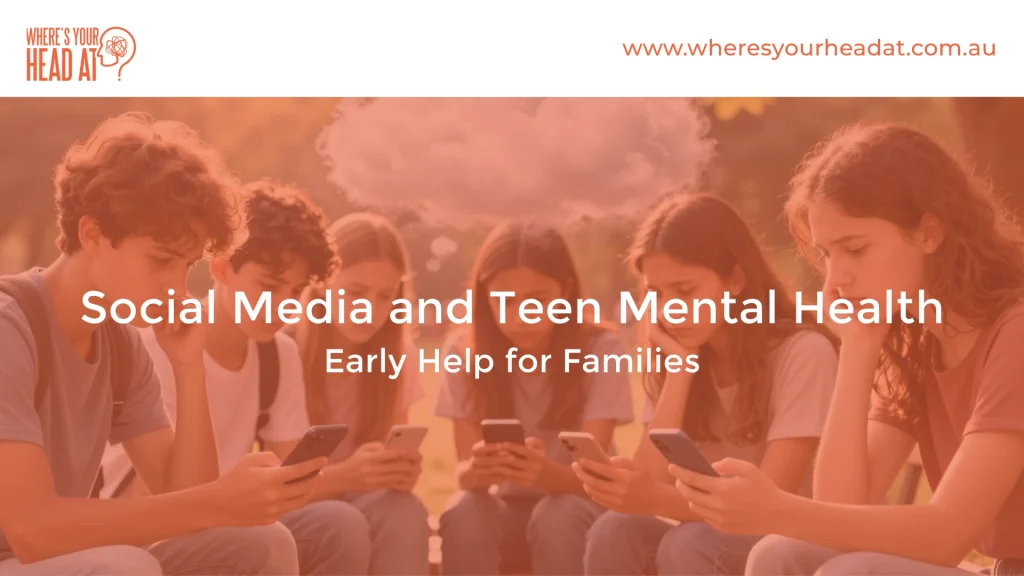
How to Protect Your Teen’s Mental Health from Social Media

Social media platforms have become a huge part of daily life for teenagers across the globe, filling their screens with endless videos, photos, and chat messages. While these online apps make it easy for young people to stay connected with friends, spending too much time scrolling can quietly affect their mental health, which is simply […]

How to Protect Your Teen’s Mental Health from Social Media Read More »

Simple Steps for Your First Therapy: Forms, Goals, Fit

Therapy sessions go better when the first appointment is treated as a practical starting point, not a test. In Australia, Medicare data shows how often people use mental health support, with 12.6 million Medicare mental health services delivered in 2023–24 and 2.7 million people (10% of the population) accessing these services, so first sessions are

Simple Steps for Your First Therapy: Forms, Goals, Fit Read More »

Counselling for Anxiety: What Happens in the First Session

Counselling for anxiety can feel a lot less overwhelming when you know what the first appointment is actually for. The first session is usually a calm, structured starting point where your counsellor explains confidentiality and its safety limits, asks about your current symptoms and triggers, and explores how anxiety is affecting sleep, work or study,

Counselling for Anxiety: What Happens in the First Session Read More »

Teen Counselling Quickstart: How to Feel Safe Before Session

Counselling for teenagers is designed to feel safe, structured, and practical, so a young person can talk openly and build skills that make everyday life easier. In most teen counselling sessions, the first appointment focuses on what is happening right now, what the teenager wants to change, and what support will feel most helpful at

Teen Counselling Quickstart: How to Feel Safe Before Session Read More »

Practical Trauma-Informed Therapy: What to Expect

Trauma-informed care in therapy means your therapist recognises that many people have lived through distressing experiences that can still affect how they think, feel, and respond today, and they work in ways that reduce the risk of you feeling overwhelmed, blamed, or unsafe. In Australia, it’s estimated that 75% of adults have experienced a traumatic

Practical Trauma-Informed Therapy: What to Expect Read More »

Family Therapy: Simple, Proven Ways to Repair Patterns

Therapy can help families move from stuck patterns to healthier ways of relating by improving communication, strengthening problem-solving, and rebuilding trust over time. In Australia, the ABS reports that 32.6% of people living in one-parent families with dependent childrenexperienced a 12-month mental disorder, showing how family stress can closely link with mental wellbeing. At Where’s

Family Therapy: Simple, Proven Ways to Repair Patterns Read More »

7 Urgent Signs of Teen Anxiety: When Help is Needed

Anxiety can be hard to spot in teenagers because it does not always present as constant worrying or obvious fear. In my sessions, I often notice it first through avoidance, irritability, perfectionism, changes in sleep, or physical symptoms like stomach aches and headaches that keep coming back. Australian clinical guidance also highlights how common this

7 Urgent Signs of Teen Anxiety: When Help is Needed Read More »

Counsellor vs Mental Health Expert: Key Differences Made Easy

Counsellor support is often the first place people look when they want a safe space to talk through stress, relationships, grief, or life transitions, but the titles counsellor, psychologist, and psychotherapist are often used interchangeably. That confusion is common because many Australians access professional help each year, and in 2023–24, about 2.7 million Australians (10%

Counsellor vs Mental Health Expert: Key Differences Made Easy Read More »

10 Practical Ways Grief Counselling Helps

Grief counselling can make life after a loss feel less confusing and less overwhelming, especially when emotions come in waves, and day-to-day routines start to feel hard. We create a calm, supportive space where people can speak openly, process what has happened at their own pace, and learn practical ways to cope with the changes

10 Practical Ways Grief Counselling Helps Read More »

ADHD Coaching vs Counselling: Proven Steps for Confident Young People

Counselling is often where we start when young people are finding school, friendships, and everyday routines harder to manage. In Australia, the Australian Institute of Health and Welfare (AIHW) estimates that about 14% of children and adolescents aged 4 to 17 experienced a mental illness in the previous 12 months, and ADHD was among the

ADHD Coaching vs Counselling: Proven Steps for Confident Young People Read More »